

.svg)
Free Survey
Our People
Our Thinking
Shop

You can expand your thinking-and still be the bottleneck. That realization took me a few years to see that clearly.
Four years ago, I wrote about becoming a “switch hitter.” The metaphor came from baseball.
In Major League Baseball, only about 13% of players bat from both sides of the plate. Switch hitters do it. They do it for options. Facing a right-handed pitcher? Bat left. Facing a lefty? Switch sides. It’s not easy. Most players have a dominant side, and batting averages often drop when they hit from the other.
But the adjustment gives them an edge. The same is true for leaders.
Most leaders are dominant-handed — not physically, but cognitively. We rely on familiar “thinking patterns." We lean on our strongest instincts. We default to what’s worked.
As an executive coach, I often hear leaders say they want to think bigger or be more agile. What they’re really asking is how to move beyond the thinking patterns that got them there.
The original Switch Hitter idea was about expanding how we think. Moving from fixed thinking — the need to be right — to expansive thinking — being willing to learn. That requires “deliberate practice.” Just like hitters train against different pitches, leaders need to practice thinking beyond their natural strengths. This is possible throughout our lives; the brain continuously rewires itself through experience and repetition.
In the original article, I described a simple way to stretch your thinking: the Thinking Pattern℠ — four lenses leaders can use to approach challenges:
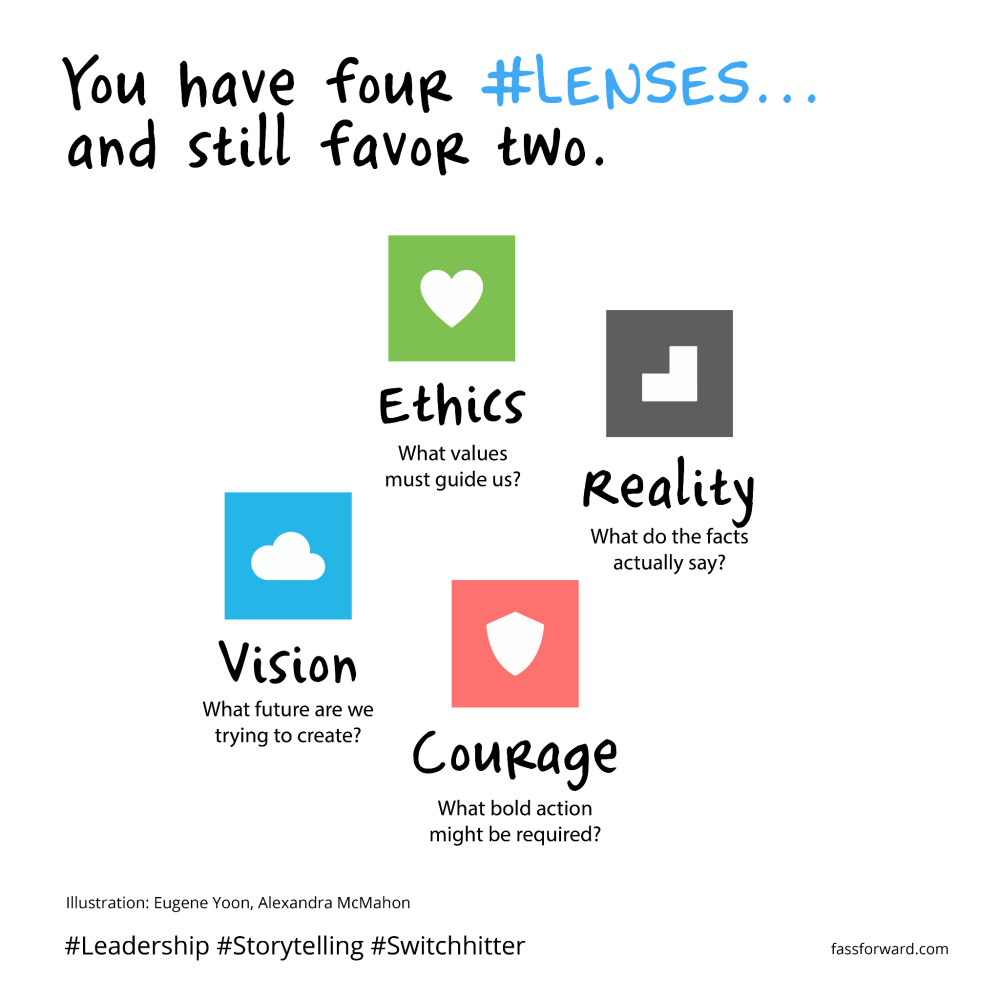
• Vision – What future are we trying to create?
• Courage – What bold action might be required?
• Ethics – What values must guide us?
• Reality – What do the facts actually say?
Most of us naturally lean on only two of these, like a dominant batting side. Switch Hitter 1.0 was about building the mental dexterity to use all four. And that lesson still holds, but experience has added something important.
Expanding your thinking improves your range. It doesn't improve your scale.
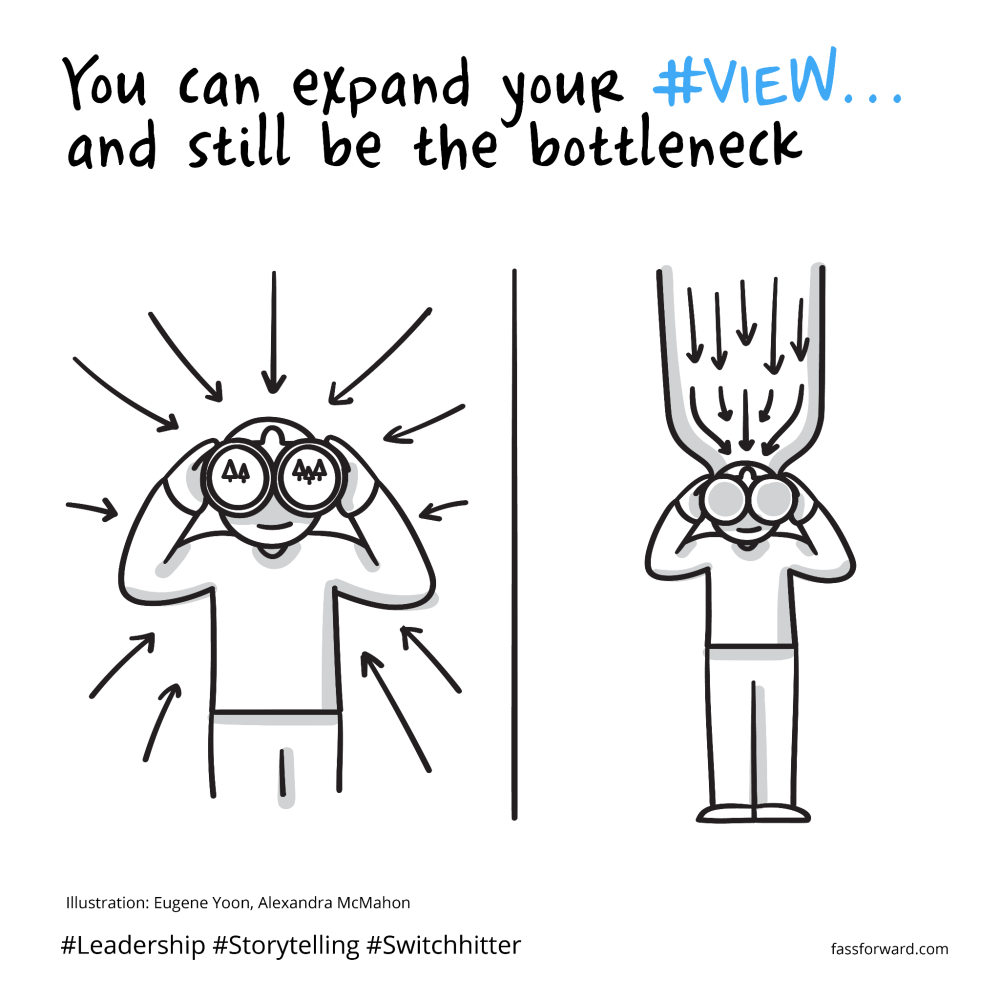
You can see more angles… And still centralize decisions.
You can welcome new perspectives… And still be the filter.
You can think expansively… And still exhaust yourself trying to carry it.
That’s the trap. Individual agility feels like progress. But organizational agility requires distribution. Agility doesn’t scale through the leader. It scales through the system.
Which brings us to Switch Hitter 2.0.
The first version of the idea focused on the leader.
Your thinking.
Your adaptability.
Your ability to approach problems from multiple perspectives.
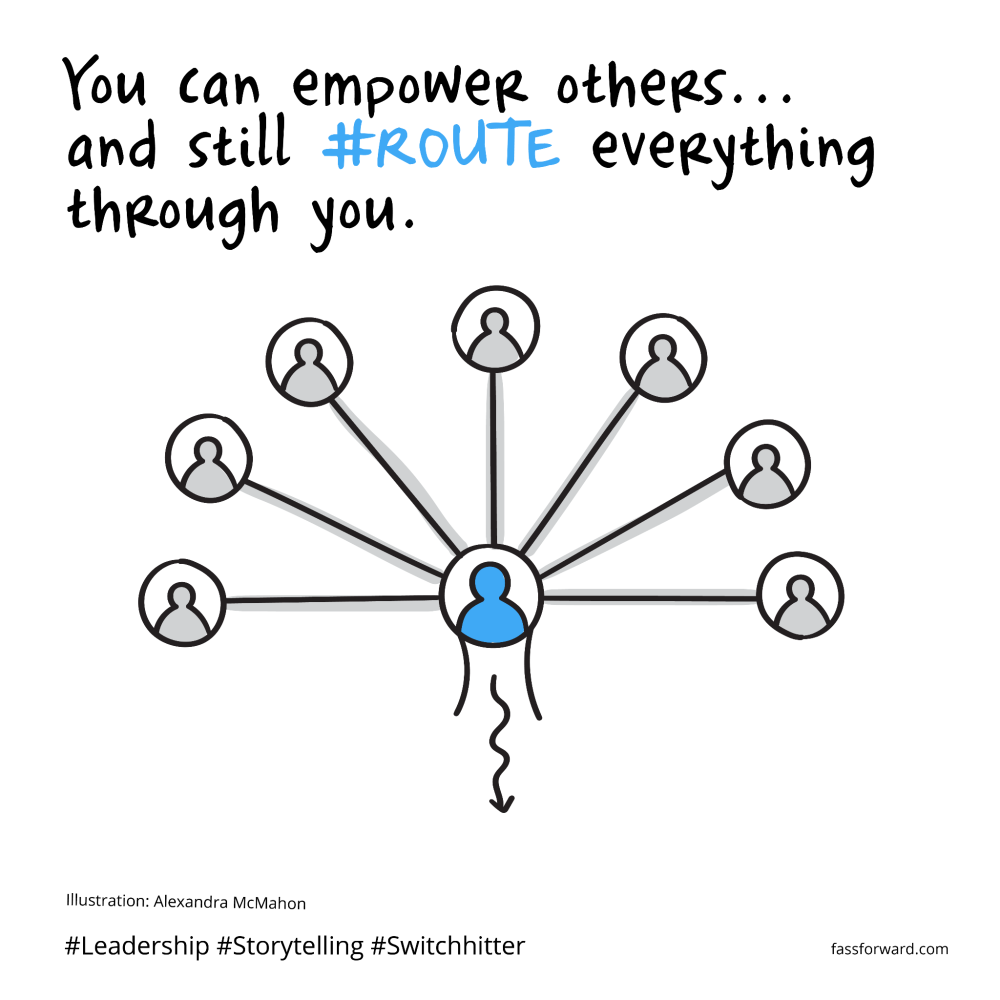
But leadership eventually runs into a structural limit. No matter how agile your thinking becomes, if every decision, interpretation, or escalation still runs through you, the organization moves at the speed of your attention. That’s not agility. That’s dependency.
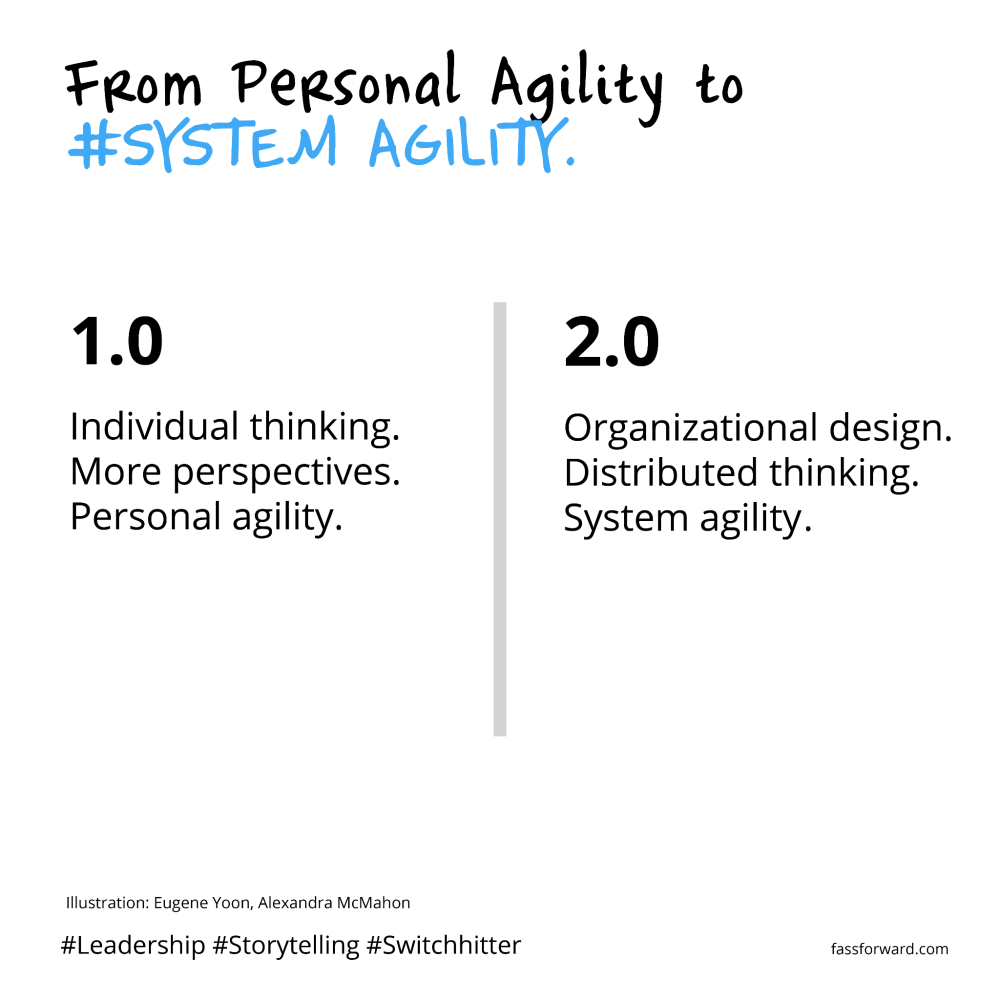
Switch Hitter 2.0 shifts the focus from the individual to the organization.
The question is no longer just: How do I expand my thinking?
It becomes: How do I build a team that can think through a problem without me?
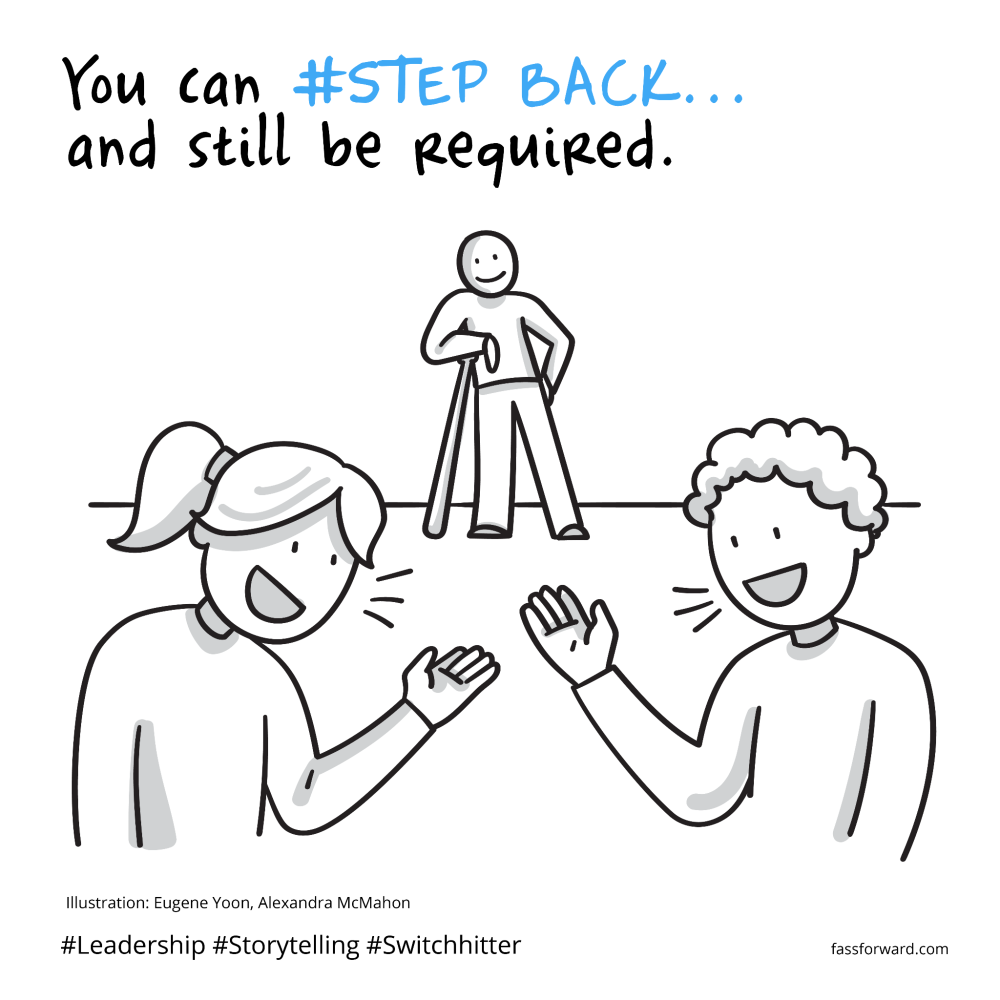
Not just developing cognitive flexibility —but designing conditions where flexibility becomes cultural. What does that actually require? It’s not a mindset shift. It’s a design shift. It shows up in what you stop owning, what you make explicit, and what you reinforce repeatedly.
• You clarify which decisions no longer come to you — and you hold that line, even when it’s uncomfortable.
• You make your thinking visible — not just the answer, but how you weigh vision, courage, ethics, and reality — so others can apply it without you.
• You replace escalation with structured conversation — where trade-offs surface, not sent up for approval.
• You reward people for thinking, not just agreeing — especially when they reach a different conclusion than you would have.
Teams don’t become agile by being told to think differently. They become agile when the environment requires it.
Where:
• People surface trade-offs without waiting.
• Context travels without translation.
• Decisions move without escalation.
• Multiple thinking patterns show up in the room — even when you’re not there.
In other words, agility stops being a leadership trait and becomes an organizational capability. Switch Hitter 1.0 expanded the mind. Switch Hitter 2.0 expands the organization. The first builds capability. The second builds resilience at scale.
The real question for leaders becomes this: Can you switch sides…and have you built a team that doesn’t need you at the plate every inning?
The first builds capability…the second builds capacity. Because expanding your thinking makes you a better hitter. Expanding the organization builds a better lineup.

And organizations move faster when people can step up to the plate.

Frank Mazza is a Principal Consultant, Executive Coach, and Lead Facilitator at fassforward. He works as a coach one on one, and a facilitator with intact teams, and large organizations across a wide range of fassforward's live and online programs. Known for his ability to present familiar concepts in such a manner as to give "life" to the content and spark renewed and sustained interest.


