
.svg)
Free Survey
Our People
Our Thinking
Shop

TLDR: Executive coaching often falls short not because leaders resist growth, but because coaching becomes disconnected from the business, poorly measured, and too slow to meet real leadership moments.
Executive coaching has never been in more demand.
According to Mordor Intelligence, the market is expected to grow from around $100 billion today to $175 billion by 2031. While the industry is rapidly expanding, the standard of executive coaching often falls short of what is necessary for true professional transformation.
As the demand for high-level guidance grows, it is critical to elevate the quality of coaching to deliver measurable, high-impact results. When I stepped in to lead fassforward's executive coaching practice in 2017, this was my primary goal.
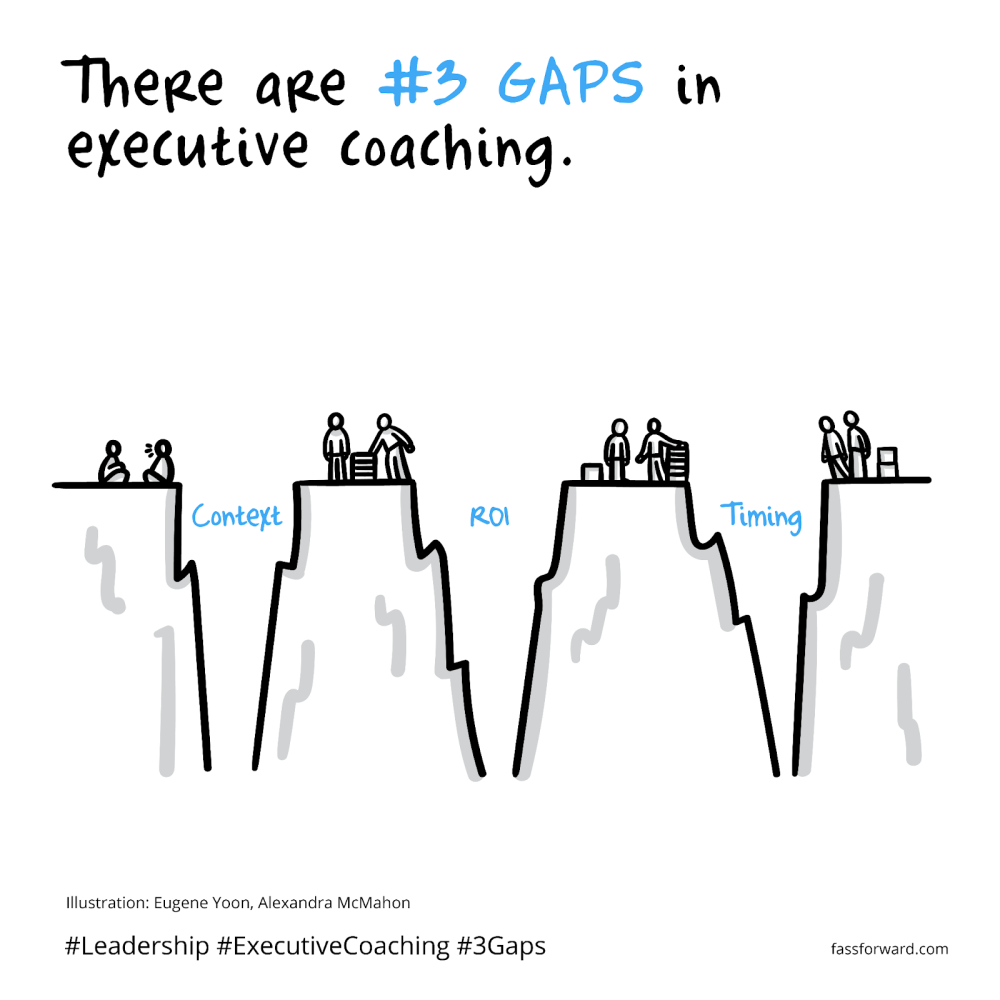
I consistently found 3 gaps in Executive Coaching.
With the proliferation of coaching, they are more prevalent than ever.
Too often, coaching starts with good intentions: a coach and a leader commit to months of work together. The leader invests deeply in reflection and self-awareness.
But that journey frequently becomes disconnected from the business itself.
Conversations turn inward.
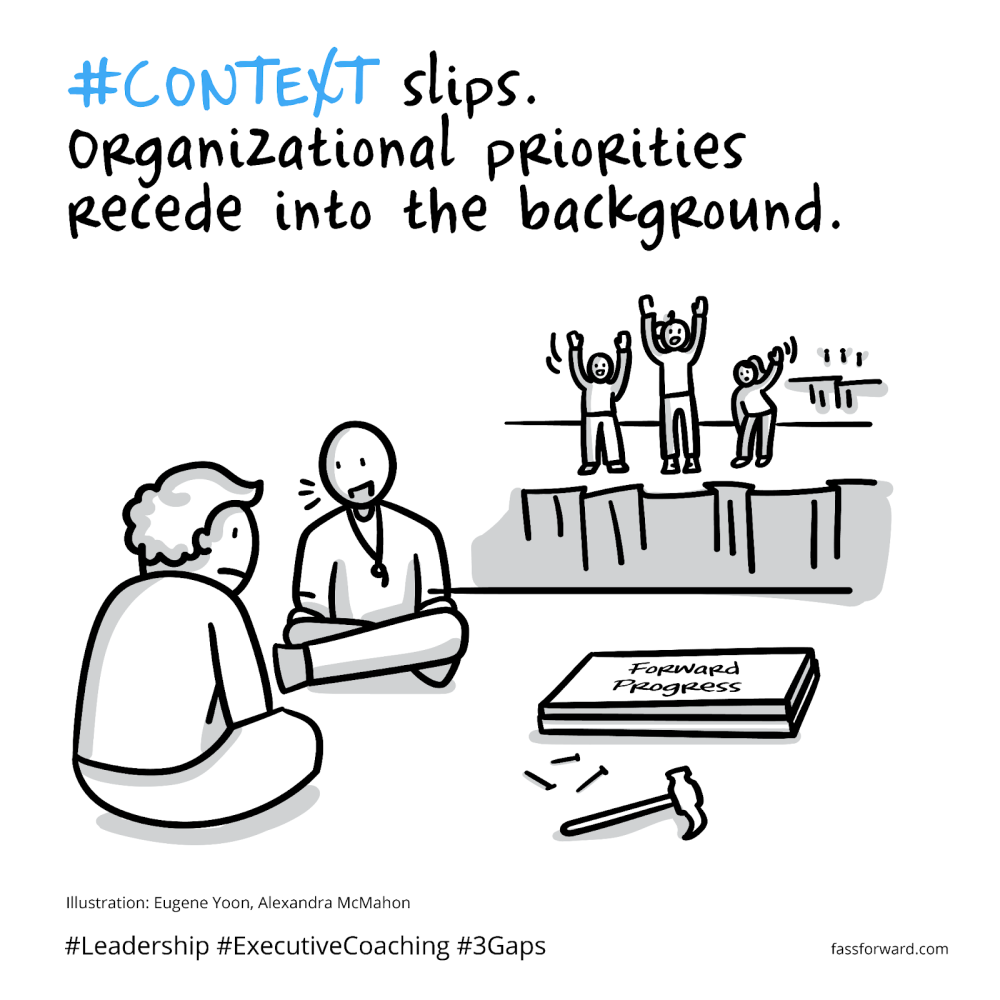
Context slips. Strategy, culture, and organizational priorities recede into the background.
In some cases, the work drifts into a gray area that feels closer to therapy than leadership development.
That’s not a critique of therapy (my mom is a therapist), it’s simply not the purpose of executive coaching.
Leadership doesn’t happen in isolation, and neither should coaching.
At fassforward, coaching is treated as a team sport. It is grounded in the reality that leaders operate inside systems with peers, direct reports, boards, customers, and culture shaping every decision they make.
Coaching engagements are stronger when:
This approach doesn’t dilute the coaching relationship; it strengthens it. It keeps the work anchored in the business and ensures that growth is visible, relevant, and shared.
When coaching becomes overly individualized, leaders may feel supported, but the organization rarely feels the difference.
Another downside to the individualization of coaching is ROI.
If key stakeholders are not engaged in the process, how can ROI be accurately measured?
Ask 10 organizations how they measure the ROI of coaching, and you’ll likely get 10 different answers. Some will answer they don’t, while others approach it quantitatively, and still others use vague qualitative measures.
A big part of the problem lies in our reliance on the word goals.
Goals imply something finite, something to be achieved and checked off.
But leadership development rarely works that way.
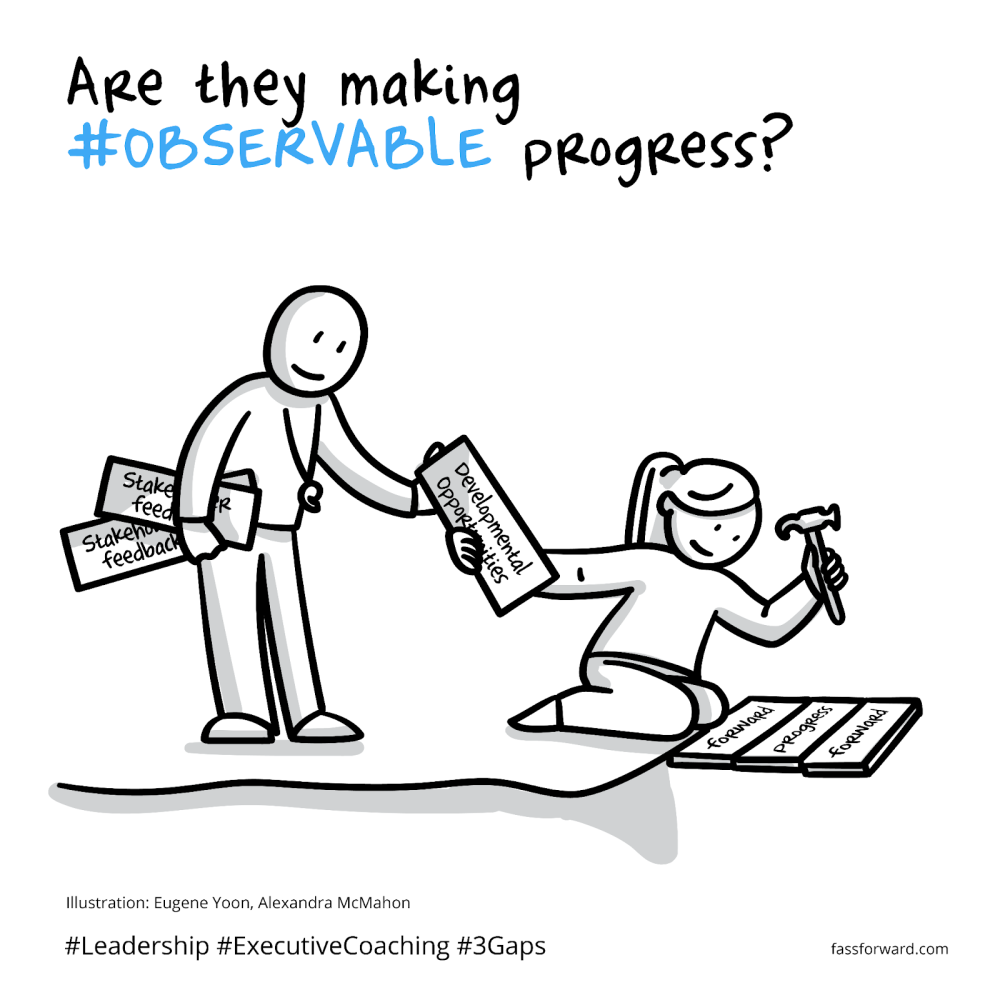
At fassforward, ROI is grounded in clearly defined developmental opportunities, not check-the-box goals. These opportunities are not problems to be solved once and forgotten. They are areas a leader will often work on, consciously and unconsciously, throughout their career.
The question isn’t whether they’ve “completed” something. The question is whether they’re making observable progress.
That’s why we believe ROI in Executive Coaching is best assessed by:
When peers, managers, and teams can say, yes, I see that shift, value becomes visible.
Not because a target was hit, but because impact changed.
Most executive coaching engagements are scheduled at regular intervals, typically every two or three weeks.
For busy leaders, those sessions often become familiar:
By the time the next session arrives, the moment that truly mattered has already passed.
But leadership doesn’t pause for a calendar invite.
Real leadership moments happen in real time: a tense exchange with a board member, a difficult conversation with a direct report, or a high-stakes strategy pivot.
We describe executive coaching at fassforward as a thinking partnership. If that partnership is based on scheduled calls, the opportunity for real time guidance and growth is challenged.
We think it is imperative that coaches are available when clients need them. If a leader has a challenging interaction with their CEO tomorrow, the best time to partner on it is before and after that moment, not 2 weeks later.
Coaching that only looks backward limits learning. Coaching that meets leaders in the moment changes behavior.

When executive coaching falls short, it’s rarely because of a lack of effort or care. More often, it’s because the structure doesn’t match the reality of leadership.
Coaching delivers far greater value when:
At fassforward, we view leadership as a practice, and coaching is a powerful way to accelerate that practice and drive improvement.
We also believe that no two coaching engagements are the same.
While we start with this foundational framework, co-creation on approach, additional data points to measure ROI (engagement surveys, retention rates, etc), and how to drive the best results are core to what we do.
Good coaching does not fix leaders. It helps them think more clearly, act more intentionally, and show up differently over time.
And when it is done well, the impact is not just felt by the leader. It is felt by everyone around them.

David Frost is fassforward’s Head of Executive Coaching and Managing Director. He strives to do good work for good people. He also focuses on business development and operational improvement. David previously spent 20 years on Wall Street. He received his A.B., magna cum laude from Princeton University.