
.svg)
Free Survey
Our People
Our Thinking
Shop

Stories come in constellations.
That’s the view of Nobel Prize–winning economist Robert Shiller: clusters of tales around a topic, pushing or pulling a narrative. Those narrative constellations shape industries, move markets, and influence decisions.
Story stocks, on the other hand, run on narrative and numbers.
For Aswath Damodaran, professor of finance at New York University's Stern School of Business, story stocks are “businesses with compelling narratives.” To analysts and investors, those stories paint a bullish or bearish case—and move share prices.
It’s the story that makes the bull run.
Take NVIDIA. A narrative constellation about AI has made it the poster child of story stocks.
Constellation. Narrative. Numbers.
The AI constellation is everywhere—the next general-purpose technology, like electricity or the internet. Dreams of trillion-dollar productivity gains. Fears of disruption across every industry.
NVIDIA is at the heart of this narrative constellation.
The story is tried and true—selling the picks and shovels of the AI gold rush. NVIDIA’s GPUs are the essential infrastructure of intelligence—running every model, every application, every breakthrough.
Topline numbers give the story heft.
Revenue doubling year over year. Margins north of 70 percent. Trillions of dollars in market cap.
Investors trade on narrative as much as numbers.
So do customers, employees, and boards. Every organization lives inside a story—and its performance either proves or contradicts it. Equally, every layer of an organization creates value—and every layer tells a story.
When those stories and numbers drift apart, trust erodes—inside and out. Investors lose confidence. Employees lose focus. Strategy starts to fragment.
At the top, the story the C-suite tells investors must align with the numbers they run the business on. If the narrative promises innovation, the metrics should show investment in R&D, not just cost cuts. If the story is about growth, the numbers should prove momentum.
The same applies to every function—sales, marketing, product, and engineering. Each has a narrative about the value it creates, along with numbers that should make that story real. Sales tells a story of relationships and revenue. Marketing tells a tale of reach and reputation. Product tells a story of innovation. Engineering tells a story of scale and reliability. When those stories and numbers line up, they reinforce each other.
That alignment—story to numbers, across every layer—creates strategic coherence.
It’s how organizations move in unison —from boardroom to frontline—and how value storytelling becomes more than a leadership exercise.
It becomes the business’s operating rhythm.
When story and numbers drift apart, trust erodes—inside and out. Investors lose faith. Employees lose focus. Strategy starts to fragment.
A galvanizing narrative restores alignment—story to numbers—across every layer of the organization. People move in concert. It becomes the drumbeat of a business’s operating rhythm.
Here are six steps to value storytelling:
#1. Locate your constellation.
#2. Name the dominant narrative.
#3. Find your place.
#4. Stress test your story.
#5. Anchor with numbers.
#6. Drive strategy.
Figure out the narrative constellation you’re in—the one that defines your world.
If you’re at the C-suite, ask: what cluster of stories is pulling the market, the media, and your industry right now?
Inside the organization, listen for the stories that set direction. What’s your CEO saying? What’s your boss telling you?
There’s a prevailing narrative—the latest transformation, the next product release, the culture shift.
Figure out your team’s place in that story.

Once you know the constellation, look for the tension inside it. Every hero story has a villain. Every dominant narrative has a counter-narrative—the skeptics' view of the story.
For a CEO speaking to the Street, there’s a bullish narrative and a bearish one. The bullish narrative: the big idea investors, analysts, and competitors are rallying around. The bearish narrative: why that won’t work-the shadow-story that short sellers rely on.
Inside the organization, the pattern repeats. The CEO tells a tale of transformative growth; the rank-and-file employee huddles down, thinking, “This too shall pass.” A quiet undercurrent of skepticism counters a hopeful story.
Knowing both sides—the hero and the villain—keeps you grounded. It helps you write a narrative that’s both credible and resilient.
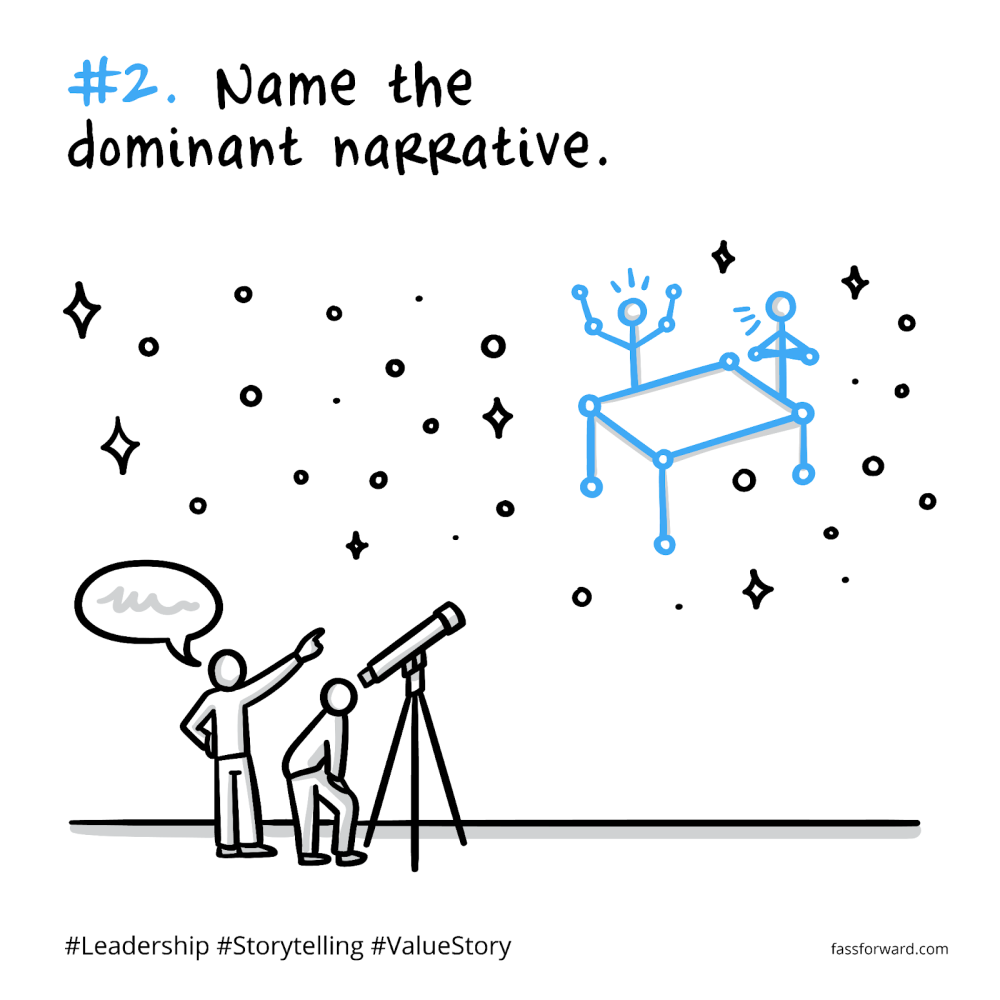
How do you stand out in that constellation? Are you the picks-and-shovels, the disruptor, or the safe haven?
Once you know the dominant narrative, refine your strategy against it.
If you’re in the C-suite, ask: where do you play in the story shaping your market? Are you driving change, defending share, or enabling others to grow? The story defines your competitive frame—what investors expect, what competitors claim, and what customers believe. It's easier to win when your strategy fits the narrative rather than fights it.
Inside the organization, the same principle applies. Every function plays into the company’s larger story. Sales writes the growth chapter, product the innovation chapter, and operations the efficiency chapter.
Know which part you own—and align what “good” looks like to the greater story.

In Story Business, your story can’t just sound good. It has to hold up.
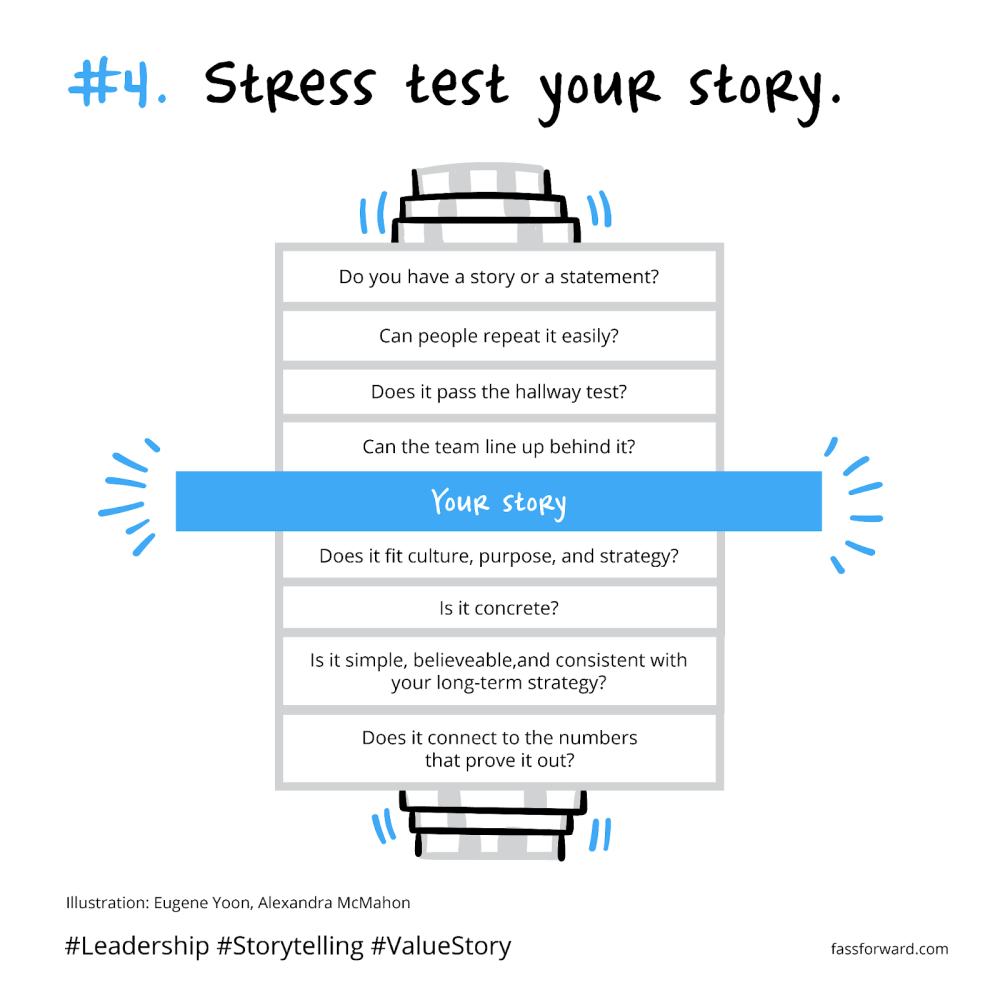
Start with the basics. Do you have a story—or a statement?
A real story is information wrapped in emotion. It connects data and decisions to how people feel about them. It makes sense to the head and matters to the heart.
Check for simplicity.
Can people repeat it easily? Does it pass the hallway test—clear enough to share quickly without losing meaning?
Does it align and unify?
Can the team line up behind it? Does it fit culture, purpose, and strategy? A misaligned story won’t stick. Gaps between words and actions turn into cracks in trust, no matter how smart the story sounds.
Is it concrete?
Abstract and airy-fairy won’t cut it. People need to get it instantly. To see it, feel it, and act on it.
If you’re in the C-suite, stress test the investor narrative. Is it simple, believable, and consistent with your long-term strategy? Does it connect to the numbers that prove it out?
Inside the organization, do the same for your team’s story. Are you clear about the value you create? Does it reflect the company’s mission and show your unique contribution?
A strong story passes three tests: it’s simple, it’s unifying, and it’s concrete.
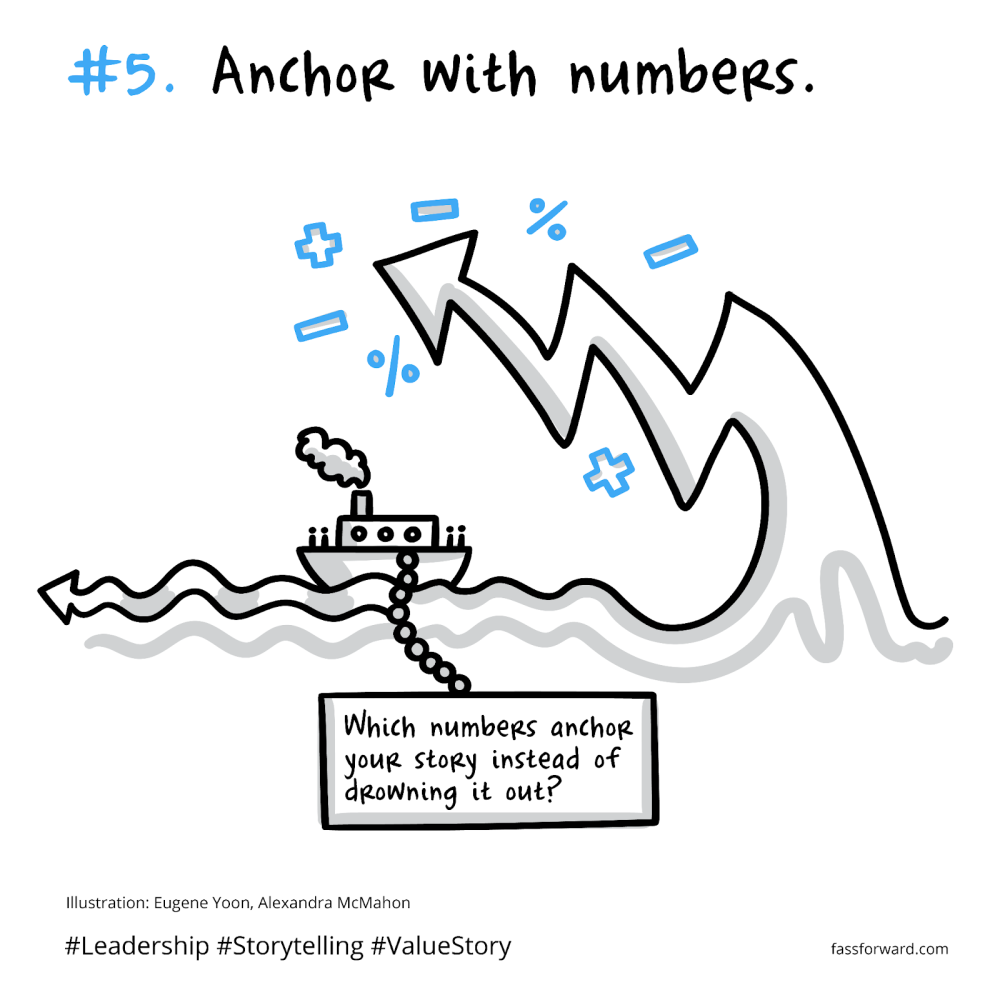
Numbers give a story heft.
Weight. Credibility. Proof. But too many drown it out—noise overpowering signal. A pinch of numbers anchors the best stories. Enough to make the story real and no more.
Too many KPIs create noise.
If you’re in the C-suite, ask: which metrics prove the story you’re telling the Street? If your narrative is growth, show revenue acceleration and customer adoption. If it’s discipline, point to margin, cash flow, or efficiency. If it’s a picks-and-shovels story, like NVIDIA, show market share, orders, and ecosystem demand.
Fewer numbers. Stronger story.
Inside the organization, use the same principle. It’s easy to measure everything. Harder to choose. Choose metrics that show progress, not activity.
If your story is about customer obsession, track retention, satisfaction, and referral rates. If it’s about modernizing a product portfolio, track revenue mix, release cadence, and customer adoption.
The right numbers reinforce the narrative.
Execution validates strategy.
It doesn’t matter how good the slide deck looks—people have to do it.
OKRs translate the story into motion. The O’s carry the narrative through every layer of the organization, giving teams a clear line of sight to the big picture. They show how each team contributes to the greater story.
The KRs anchor the narrative in numbers. They create the feedback loop—showing where the story holds and where it slips.
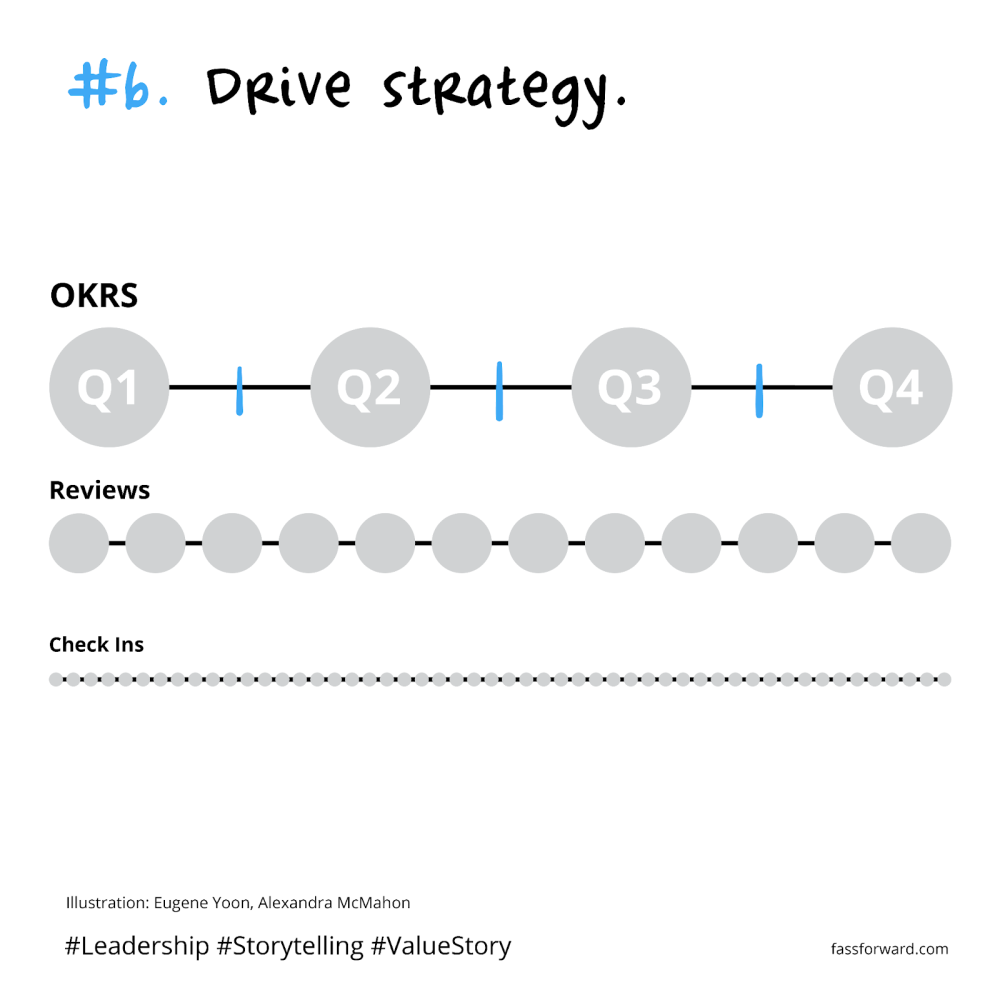
Rhythm matters.
Quarterly OKRs, monthly reviews, weekly check-ins. This is where story connects strategy to execution.
When the numbers drift from the narrative, you have three choices: fix execution, adjust the targets, or rewrite the story.
There’s a book!
Story Business. How stories and ideas make the world go round ...
Now available. More here.

Gavin McMahon is a founder and Chief Content Officer for fassforward consulting group. He leads Learning Design and Product development across fassforward’s range of services. This crosses diverse topics, including Leadership, Culture, Decision-making, Information design, Storytelling, and Customer Experience. He is also a contributor to Forbes Business Council.


