

Free Survey
Our People
Our Thinking
Shop

One pattern shows up in almost every executive I coach. The higher they rise, the less room they have to think.
Their days are filled with meetings, decisions, customer issues, people problems, and the occasional crisis that apparently could not be resolved without them. They are busy. They are needed. They are getting things done. And they are slowly losing the capacity to do the work that only they can do. Think.
This is not usually a time-management problem. Most executives have tried blocking their calendars, shortening meetings, and becoming more disciplined about email. Some of it helps. Then the next urgent issue arrives, and the white space disappears.
The real issue is deeper. It is the absence of strategic space.
Strategic space is the room leaders create to step out of the immediate problem, examine how they are thinking about it, and decide what outcome they are trying to create. Without that space, pressure takes over. And pressure has a predictable effect on our thinking.
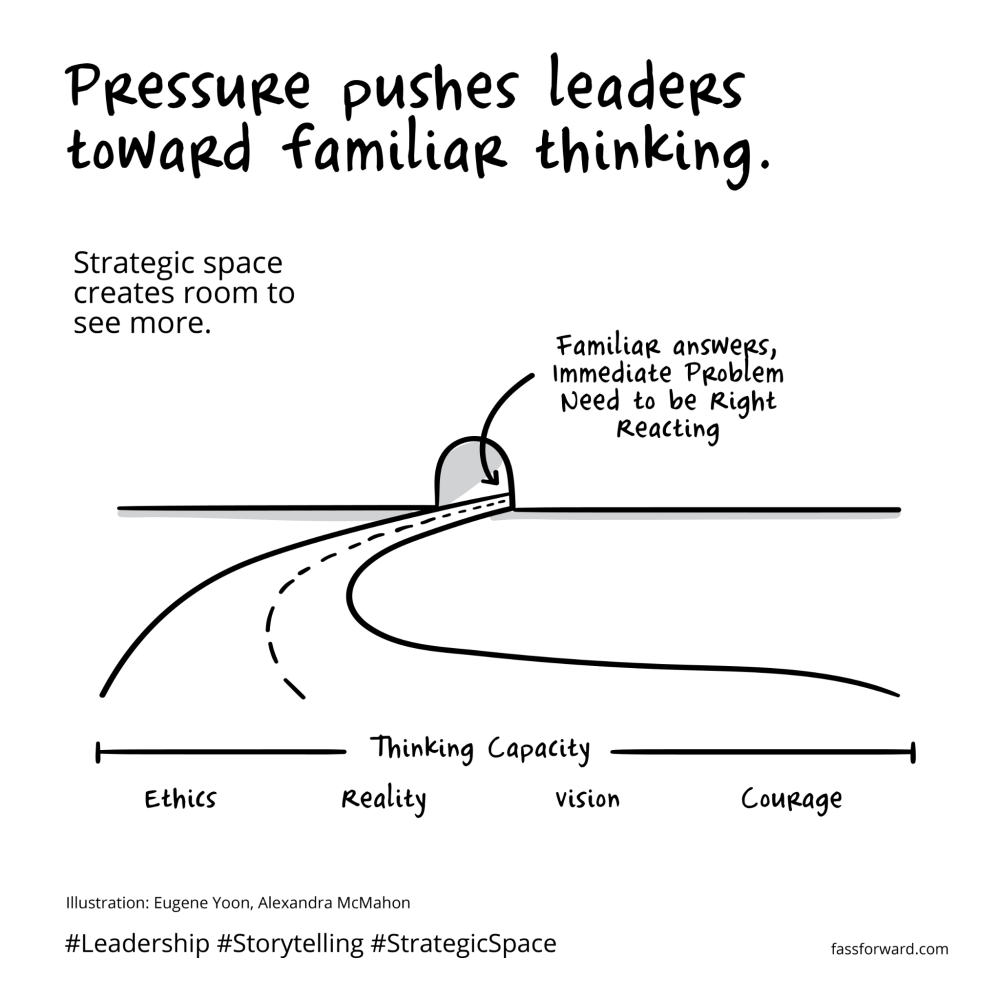
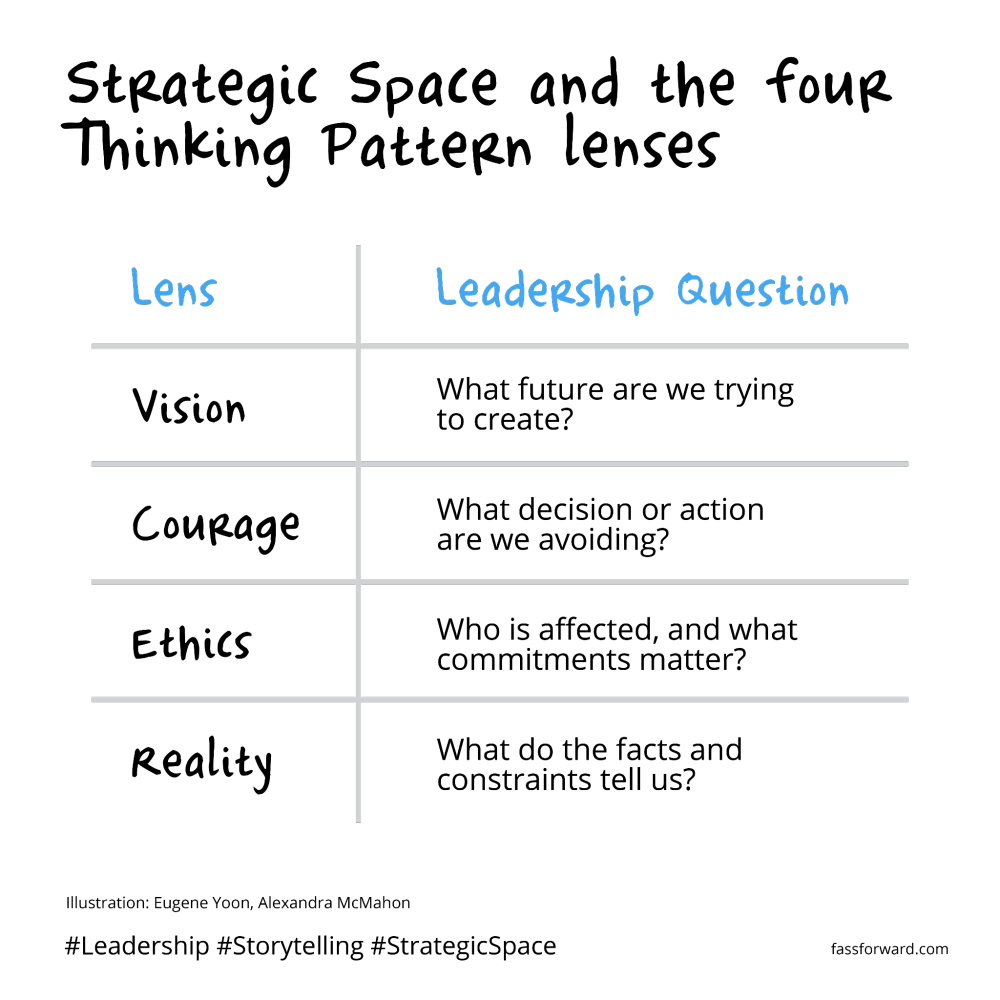
Years ago, I wrote about Thinking Patterns—the different ways leaders approach problems, decisions, and opportunities. Some of us naturally begin with Vision: What could be? Where are we going? Others begin with Courage: What decision needs to be made? What action do we need to take? Some begin with Reality: What do the facts tell us? What is actually possible? And others begin with Ethics: Who is affected? What commitments have we made? What is the right thing to do?
We are capable of using all four. But under pressure, we rarely do. We return to what is familiar. The visionary keeps producing ideas. The action-oriented leader pushes harder. The realist asks for more data. The people-focused leader tries to preserve every commitment. Our strength becomes our default. Then our default becomes our limitation. This is what I call fixed thinking. We become preoccupied with solving the problem in front of us, usually through the thinking that has worked for us before. The more pressure we feel, the more certain we become that our view is the right one.
That is why strategic space matters. It interrupts the reaction.
Strategic space is not sitting quietly and waiting for inspiration. It is creating enough distance from the immediate problem to use more of your thinking. Instead of asking only: How do we fix this? You begin asking: What outcome are we trying to create?
That question opens up the whole Thinking Pattern.
Expansive thinking does not mean endlessly considering every possibility. It means using the thinking the situation requires—not simply the thinking you prefer. That takes space.
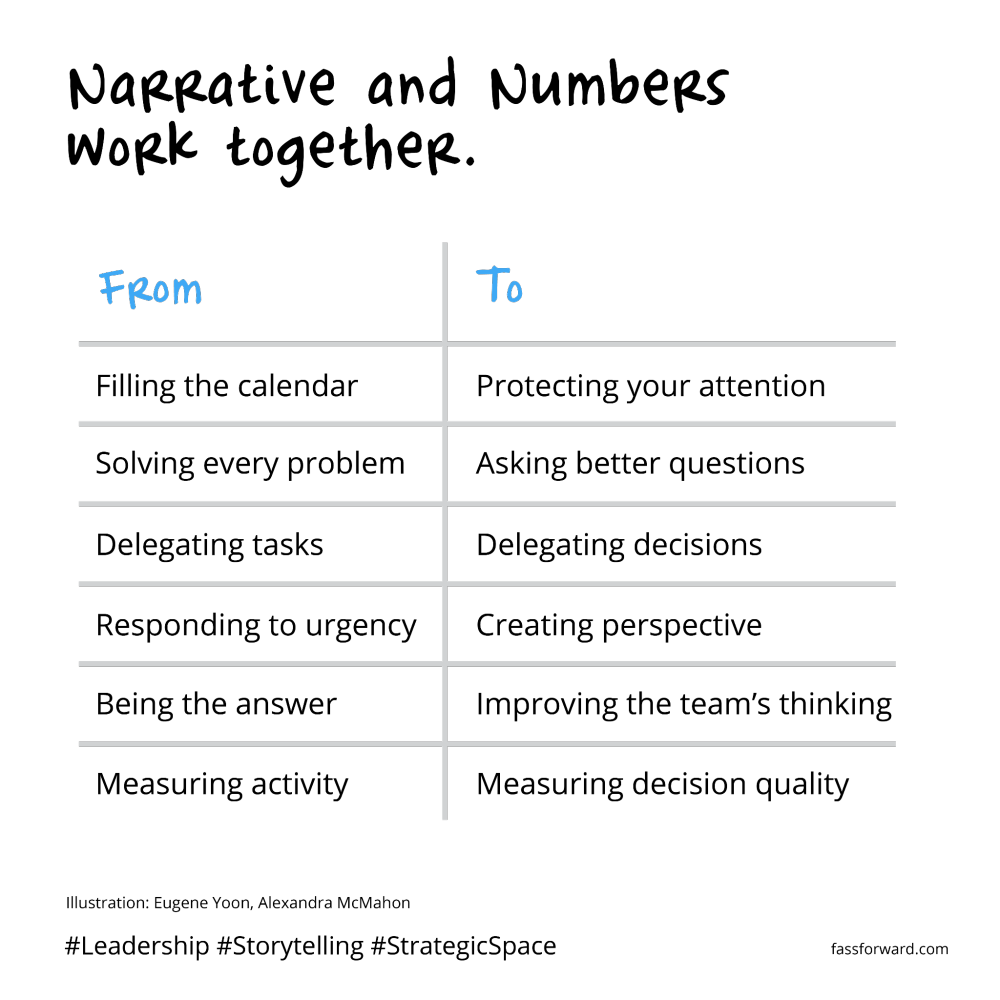
Leaders who create strategic space behave differently. They protect their attention. The greatest threat to strategic thinking isn't a lack of time. It's fragmented attention. Great leaders don't allow every email, meeting, escalation, or new opportunity to capture their focus. They decide what deserves their attention—and just as importantly, what doesn't. Because attention, not time, is the raw material of strategic thinking.
They do not allow every new issue to become their issue.They say no—not because an idea lacks merit, but because pursuing every good idea makes it impossible to deliver the important ones. They delegate decisions instead of merely delegating tasks. They understand that holding every decision may feel responsible, but it teaches the organization to wait.
They change the questions in the room. When everyone is focused on whether the team hit the number, they ask what the number is telling them. When the conversation becomes a debate between two entrenched positions, they ask what each side can see that the other cannot. When urgency begins driving the decision, they pause and ask: What are we missing because we are moving too quickly?
These are not calendar techniques.They are leadership behaviors.
It is easy to blame the calendar. But calendars do not fill themselves. A full calendar often reflects a set of leadership choices: What you believe requires your involvement. What you are unwilling to delegate. Which conversations you continue to postpone. How available you believe a good leader should be. How much of your identity comes from being the person everyone needs. That last one can be difficult to admit.
Being busy can feel like proof of value. Being included in every decision can feel like influence. Solving problems for others can feel like leadership. One realization changed how I think about leadership. Many leaders mistake dependency for importance. Strategic space requires you to give up some of that.
You have to stop measuring your value by how much work flows through you and begin measuring it by the quality of thinking you create around you.
Everyone receives the same twenty-four hours. But leaders do not have the same thinking capacity. Thinking capacity is the ability to step back, notice patterns, challenge assumptions, hold competing views, and make decisions with perspective rather than pressure.
It is depleted by constant interruption. It is narrowed by stress. It is wasted on decisions others should be making. And it cannot be recovered through another productivity app. You recover it by changing how you lead. Protect some space. Ask a different question. Give away a decision. Say no to something worthwhile. Slow the room down before everyone commits to solving the wrong problem.
The scarcest resource in leadership is not time. It is the capacity to think expansively when everything around you is pushing you to react. Strategic space is how you protect it.

Frank Mazza is a Principal Consultant, Executive Coach, and Lead Facilitator at fassforward. He works as a coach one on one, and a facilitator with intact teams, and large organizations across a wide range of fassforward's live and online programs. Known for his ability to present familiar concepts in such a manner as to give "life" to the content and spark renewed and sustained interest.